


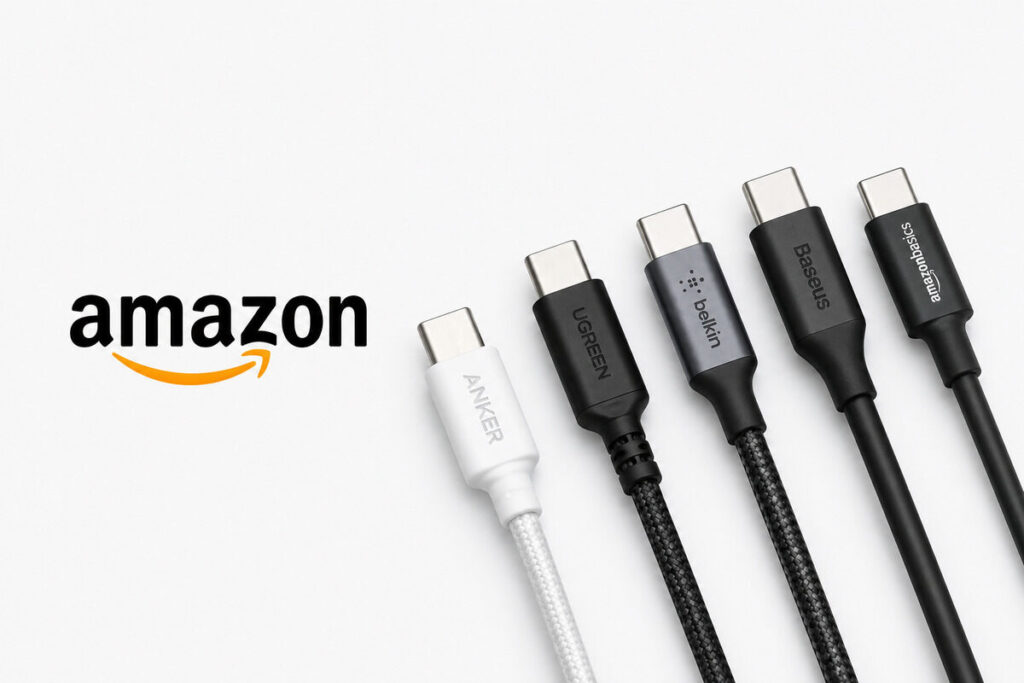
When shopping on Amazon for a USB‑C cable that does more than just charge, you want something that can actually keep up with today’s laptops, phones, and high‑refresh displays. For this roundup, I’ll focus on cables that combine strong customer feedback with solid real‑world testing and sensible specs. USB‑C cables may look similar, but differences in power rating, data speed, and video support determine whether your phone, MacBook Pro, gaming laptop, or 4K monitor actually performs the way the spec sheet suggests.
Each cable below leans into a particular strength, whether that is staying tangle‑free in your bag, handling 240W laptop charging, charging your iPhone, driving high‑resolution displays, or feeding a Thunderbolt‑heavy workstation. That way you can match the cable to the job instead of hoping one random lead will quietly do everything.
Statik MagStack Slim Pro: anti‑tangle travel
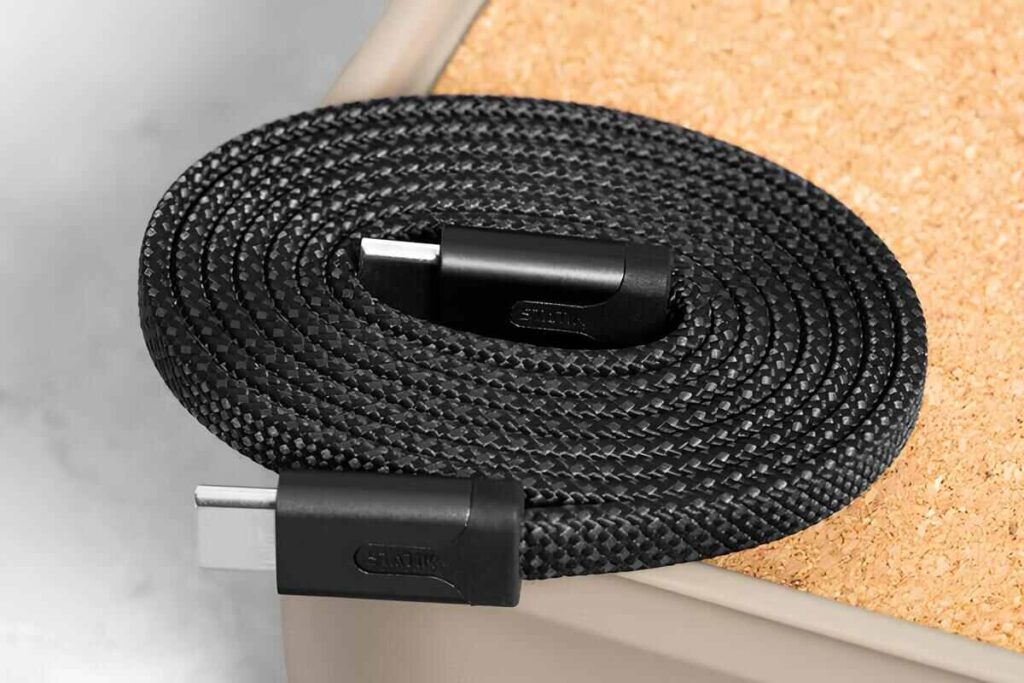
Statik’s MagStack Slim Pro Magnetic USB‑C cable is designed for people who are tired of digging through a nest of cords every time they open their bag. It has magnets distributed along the full length of the cable so it naturally coils on itself instead of twisting into knots. You can stack it into a compact shape or wrap it neatly around a charger without extra ties.
Under the sheath, it is still a proper USB‑C to USB‑C cable. It supports up to 100W charging and basic data transfer, which easily covers phones, tablets, many laptops, and accessories. The outer jacket uses a flexible woven finish that feels more like a premium cable than a throw‑in box lead, and the strain‑relief around the connectors is tuned for everyday bending.
The big win here is convenience rather than raw performance. It is not trying to be a Thunderbolt backbone for a docked workstation, but as a “grab‑and‑go” cable that behaves itself in a backpack or EDC pouch, it makes a lot of sense. If you want a travel‑friendly cord that practically refuses to tangle, this one is purpose‑built for that job.
Beats 240W: long braided runs
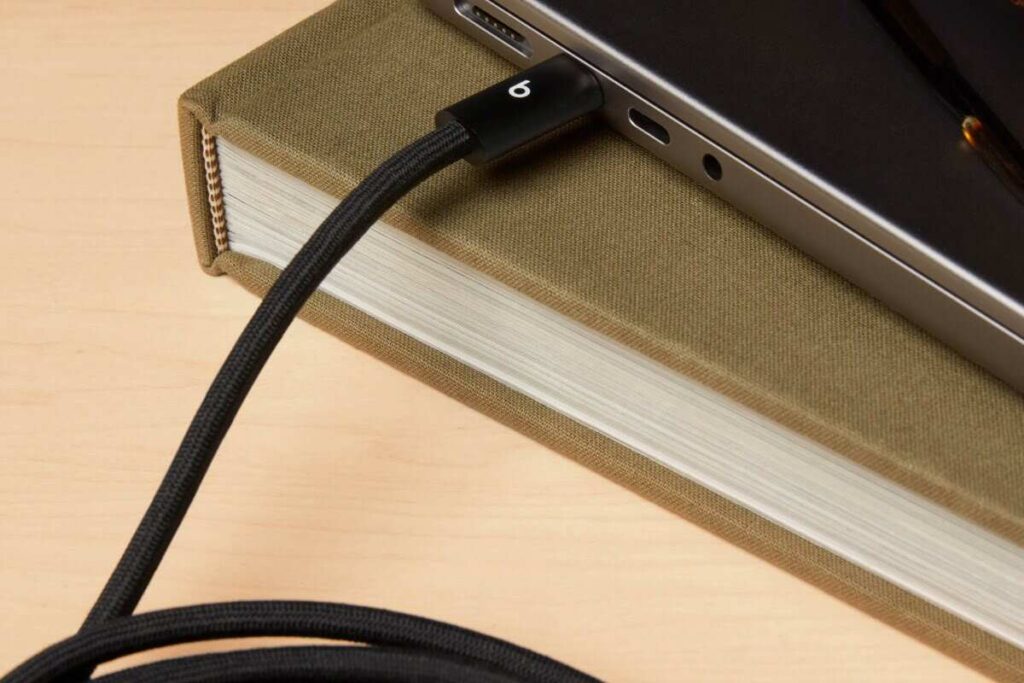
The Beats 240W USB‑C braided cable is built for users who want extra reach and a cable that looks a bit more intentional than the usual plain white lead. At roughly 3 meters (10 feet), it gives you enough length to charge a laptop or tablet from a wall outlet while you work on the couch or across the room. That long run is backed by a 240W rating, so it can comfortably feed modern high‑power notebooks.
The jacket is a braided fabric rather than smooth plastic, which helps against tangling and adds abrasion resistance when the cable drags across floors, furniture, or inside bags. Beats leans into color as well, with multiple finishes so you can tell at a glance which cable is hooked to your charger or dock.
In everyday use, this cable is best suited to users who often sit far from an outlet and want a single lead that handles both heavy charging and regular phone or tablet use. If you like the idea of a long, braided cable that does not feel cheap and is spec‑d for serious power delivery, this is one of the more user‑friendly options on Amazon.
Belkin BoostCharge: heavy‑duty with a caveat
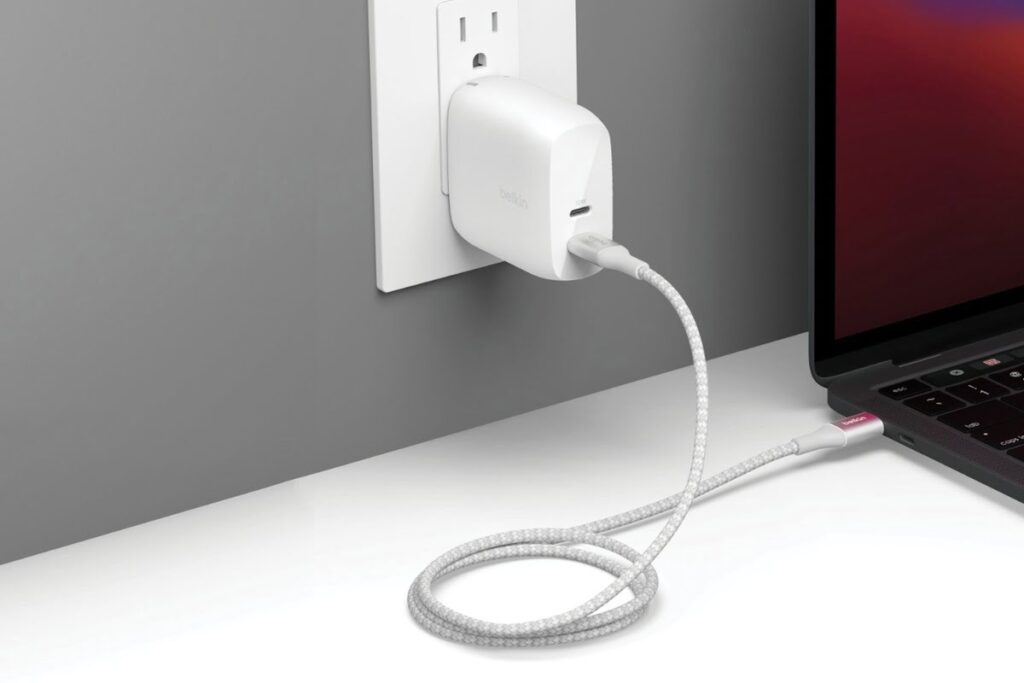
Belkin’s BoostCharge 240W cable looks and feels like a heavy‑duty high‑power lead. It uses a thick braided outer jacket, a reinforced core, and connector housings that are mostly metal, which gives it a sturdier impression than a basic rubber cable. On paper, it supports PD 3.1 and up to 240W, so it should be able to drive powerful laptops and larger devices.
Durability testing shows that it holds up well structurally under repeated bending. After tens of thousands of bend cycles, the cable does not dramatically degrade electrically, and resistance stays within expected ranges for a high‑power lead. This makes it appealing if you are rough on cables or travel with chargers packed tightly into bags and cases.
The caveat is heat. Under heavy load and after extended bend testing, the head of the cable becomes uncomfortably hot to the touch, even though the electrical performance remains stable. It also has trouble consistently reaching some higher charging profiles in testing, including certain 100W pulls.
If you want a cable that feels very robust but you are aware of its thermal behavior and plan to use it in well‑ventilated setups, BoostCharge can still fit, just not as the default “always on maximum” lead.
Cable Matters USB‑C to DisplayPort 1.4 cable: high‑refresh 4K and 8K displays
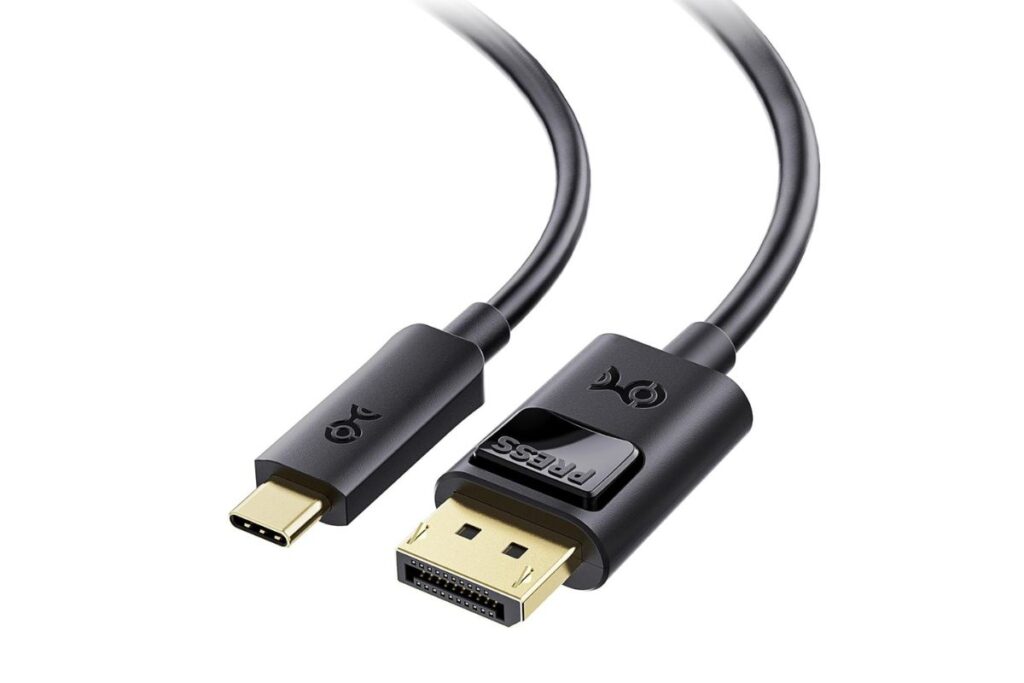
The Cable Matters USB‑C to DisplayPort 1.4 cable is a video‑first option designed to move high‑resolution, high‑refresh signals from a USB‑C or Thunderbolt port to a DisplayPort monitor. It supports up to 8K at 60Hz and 4K at high refresh rates, including gaming‑friendly modes, when paired with hardware that exposes DisplayPort 1.4 HBR3 plus DSC over USB‑C. This makes it suitable for creator monitors and high‑end gaming displays.
Beyond resolution and refresh rate, the cable can handle multichannel audio and Multi‑Stream Transport, which allows daisy‑chaining multiple monitors from one port in compatible setups. Physically, it uses a simple but practical design with a standard USB‑C plug and a DisplayPort connector that includes latches to lock into the monitor so you do not accidentally tug it out.
One limitation is direction. This is a unidirectional cable, so it is intended for a USB‑C source feeding a DisplayPort screen, not the reverse. The highest resolutions also depend on the host port supporting the right flavor of DisplayPort over USB‑C, so laptop compatibility is worth confirming ahead of time. If you mainly care about driving 4K or 8K displays from a modern notebook without dealing with an adapter, this cable keeps the chain simple.
Anker Nano: everyday 240W fast charger
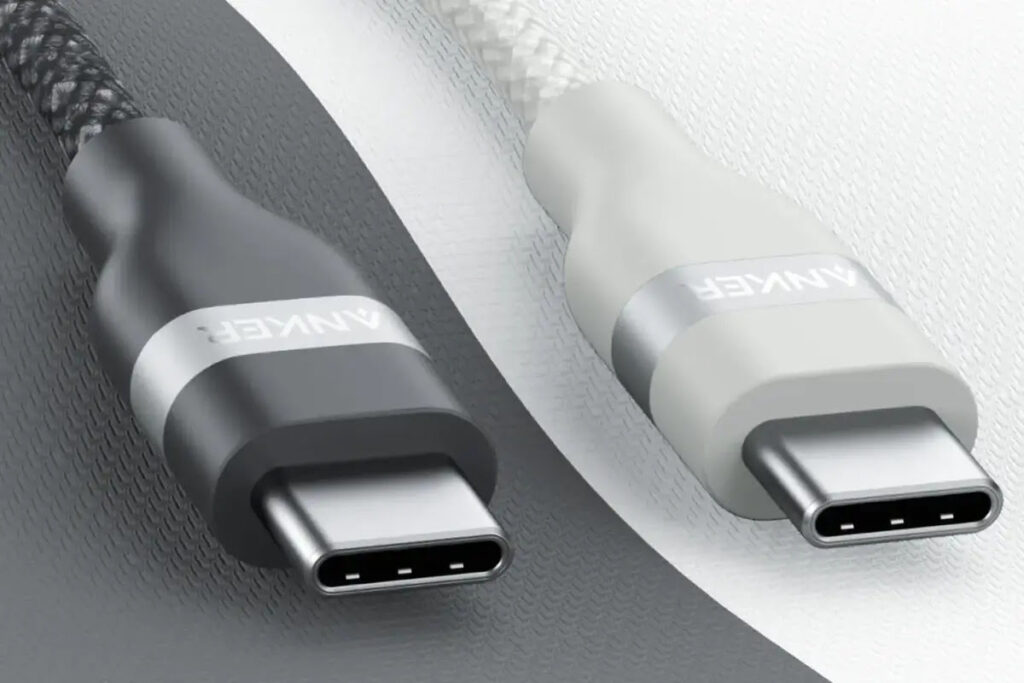
The Anker Nano USB‑C cable is built as an everyday 240W charging lead that you can keep on a desk or toss into a bag without worrying too much about wear. It is rated up to 240W under PD 3.1, so it can handle high‑power laptop chargers, larger tablets, and multi‑port GaN bricks without being the bottleneck. Pair it with a capable USB‑C charger and it is more than enough for modern MacBook Pro‑class machines.
The outer jacket uses a flexible braided finish, and the cable is tested for tens of thousands of bends, which is useful if you are constantly rolling and unrolling it around compact chargers or stuffing it into travel pouches. Despite the durability focus, it remains softer and easier to route than very stiff high‑power cables.
One important detail is that this cable prioritizes power over speed. It is limited to USB 2.0 data rates, around 480Mbps, which is fine for occasional backups or moving smaller folders but not ideal if you regularly transfer large video projects or use fast external SSDs.
For most users who just want a cable that charges a phone, tablet, and laptop quickly, though, this trade‑off is perfectly acceptable. As a general‑purpose 240W charging cable that stays flexible and feels well made, the Nano option is very easy to recommend.
OWC Thunderbolt 5: workstation‑grade USB‑C
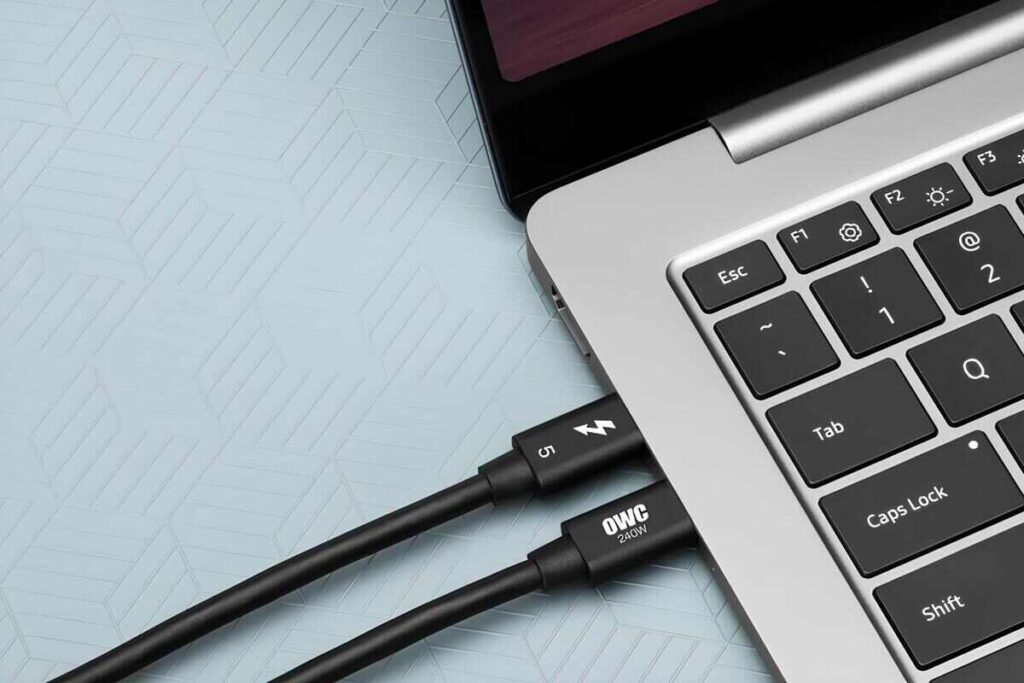
OWC’s 2‑meter Thunderbolt 5 cable is aimed at people running serious desks with docks, fast storage, and multiple high‑resolution monitors hanging off a single port. It is fully certified for Thunderbolt 5 and tuned to maintain full performance at its extended length, not just short‑cable speeds. That means up to 80Gbps of bidirectional bandwidth and up to 120Gbps of boosted downstream bandwidth for demanding display setups.
It also supports up to 240W of power delivery, satisfying the newer high‑power USB‑C specs, so it can handle both data and charging in a single link for compatible docks and laptops. On top of that, it integrates smoothly with current USB4 and Thunderbolt ecosystems, delivering the multi‑display and high‑speed external storage features that workflows like video editing or 3D work rely on.
A key advantage is backward compatibility. When you connect this cable to older Thunderbolt 3 or Thunderbolt 4 devices, it negotiates down to the best speed those devices support, rather than failing outright. That makes it a “buy once, use for years” option as you move from one generation of hardware to another. If you want a single cable for a high‑end docked setup that can grow with your machines instead of being replaced at every upgrade, this is exactly what it is built for.
Apple woven: OEM 240W Mac‑first lead
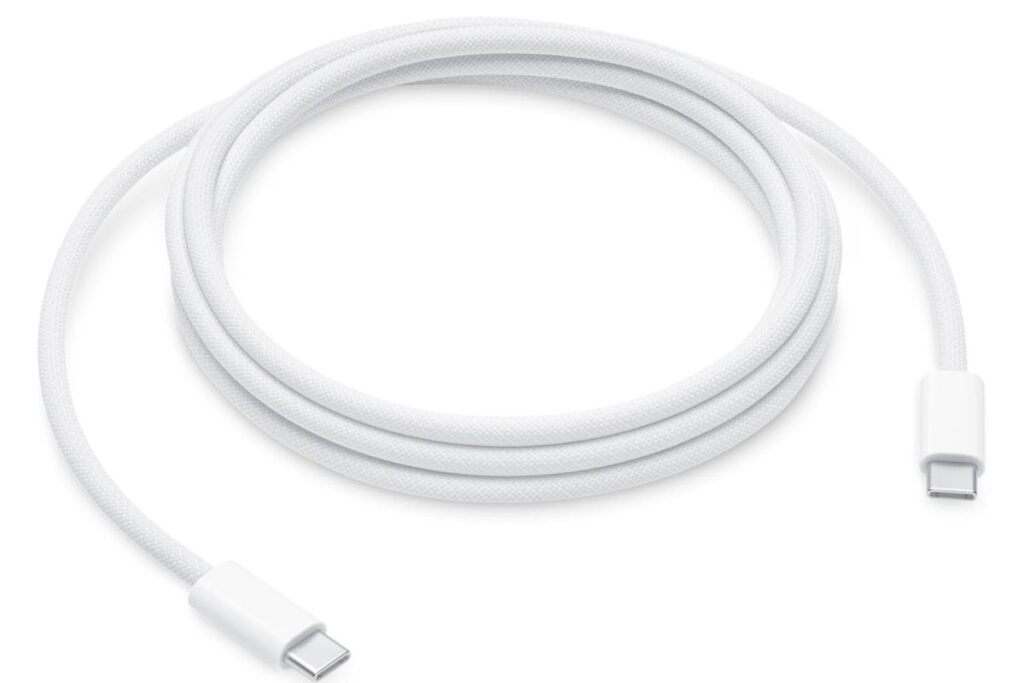
Apple’s 240W USB‑C woven charge cable (A2794) is the straightforward choice if you prefer to stay in the first‑party ecosystem for your MacBook, iPad, or iPhone. Internally, it uses an E‑marker controller that negotiates USB Power Delivery 3.1 profiles up to 50V at 5A, giving it a 240W ceiling while staying within spec. In practical charging tests, it comfortably pushes high wattages into compatible laptops and power banks without misbehaving.
The woven exterior is a big step up from older smooth designs. Multiple layers of shielding and tensile fibers sit under the fabric, which is then braided over the top to resist tangling and improve durability around bends and friction points. That makes it more forgiving when you wrap it around chargers, throw it into bags, or let it drag across the edge of a desk.
Data speed is intentionally modest. This cable is limited to USB 2.0 rates, so it is not the right pick for driving fast external drives, but that matches its purpose as a high‑power charging lead. If what you want is a cable that is tuned for Apple devices, supports the latest PD spec, and feels noticeably more premium than older white leads, this woven 240W option fits neatly into that role.
Ugreen 240W: budget 240W workhorse
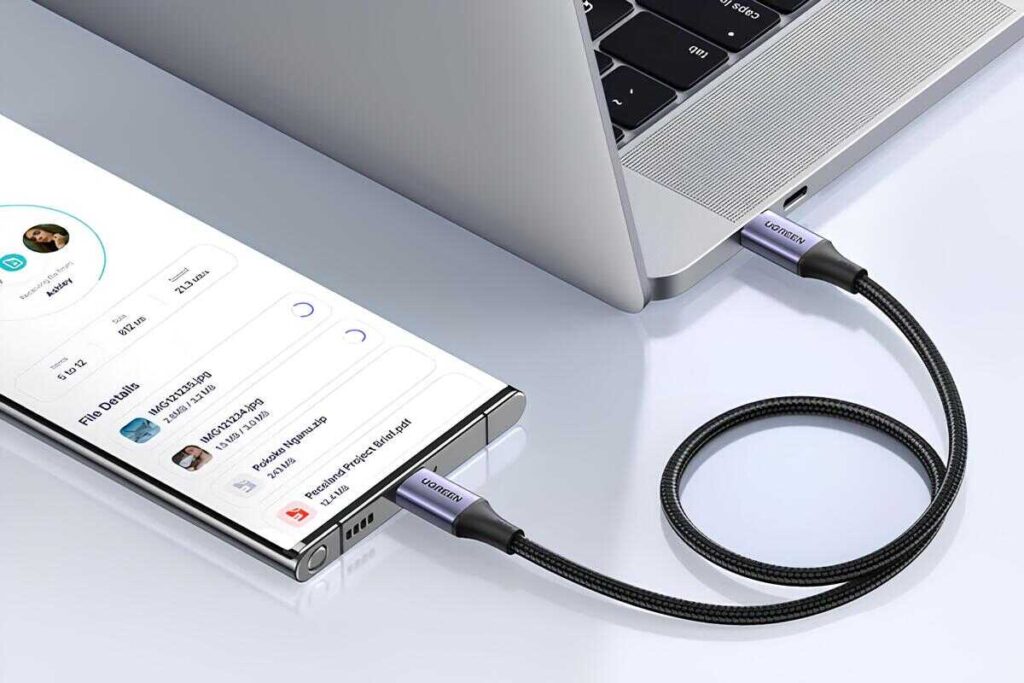
Ugreen’s 240W USB‑C cable is a strong value option if you want high‑power charging without a premium price tag. It supports PD 3.1 up to 240W, which means it can feed modern laptops, tablets, and larger phones at their intended charging speeds when paired with the right charger. In real‑world testing, it delivers fast top‑ups for both phones and notebooks, hitting aggressive charge percentages in roughly half an hour.
The cable uses a nylon braided jacket for durability and improved resistance to tangling. That outer layer, combined with reinforced stress points, helps it survive being bent and stuffed into bags repeatedly, which is important for a daily‑carry cable or one that lives in a travel kit. Length options include up to around 6.6 feet and shorter variants, so you can pick a cable that fits a bedside, desk, or couch setup without leaving excess cord coiled on the floor.
Like several high‑power leads in this roundup, this one focuses on charging rather than fast data. It tops out at USB 2.0 speeds, which are enough for occasional syncs and light file transfers but not ideal for heavy external‑drive workloads. For most users who simply want a reliable, affordable cable that will not blink at a 240W charger or a demanding laptop, Ugreen’s option hits that sweet spot.