


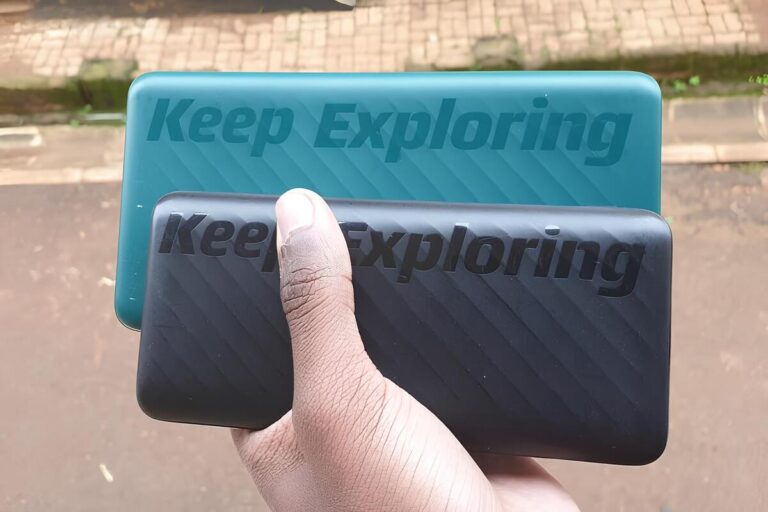
There’s something frustrating about scrolling through power banks online and seeing nothing but confusing specs and marketing jargon. You’ve got capacity numbers thrown at you, mysterious wattage ratings, and price tags that don’t seem to match what you’re actually getting.
After reviewing countless models for my YouTube channel and testing gear extensively, I’ve learned exactly what separates a truly useful power bank from an expensive paperweight. Let me break down everything you actually need to know before you buy one.
How much juice do you actually need?
Let’s start with the number you’ll see plastered everywhere: milliamp-hours, or mAh. This is what manufacturers advertise most aggressively, but it’s also the most misunderstood spec. In reality, a 5,000 to 10,000 mAh power bank will give you roughly one full charge for your smartphone. That’s it. If you’re someone who just needs a quick top-up during a day out, that’s perfectly fine. But if you’re traveling or spending extended time away from an outlet, you’ll want to think bigger.
The sweet spot for most people is the 10,000 to 20,000 mAh range. This capacity will charge your device about three to four times, which is ideal for weekend getaways or short trips when you need reliable backup power. I’ve carried 20,000 mAh models on short and long trips, and they’ve consistently gotten me through a full day or two without stress.
If you’re a power user, someone constantly charging multiple devices or running power-hungry apps — anything above 20,000 mAh is your playground. These are heavier, more substantial units designed for people who are serious about portable power.
But here’s something critical that most people don’t realize: if you’re planning international travel, airlines typically restrict power banks above 27,000 mAh. So even if you think you need a massive 40,000 mAh unit, check your airline’s regulations first.
One more thing, ignore the “real vs advertised capacity” debate that goes viral online. Yes, there’s some efficiency loss during voltage conversion (most power banks store energy at 3.7V but output at 5V), and you’ll lose about 10-20% of capacity there. But reputable brands are pretty transparent about this, and it’s nowhere near as dramatic as some clickbait videos suggest.
Output power is what actually matters for your daily life
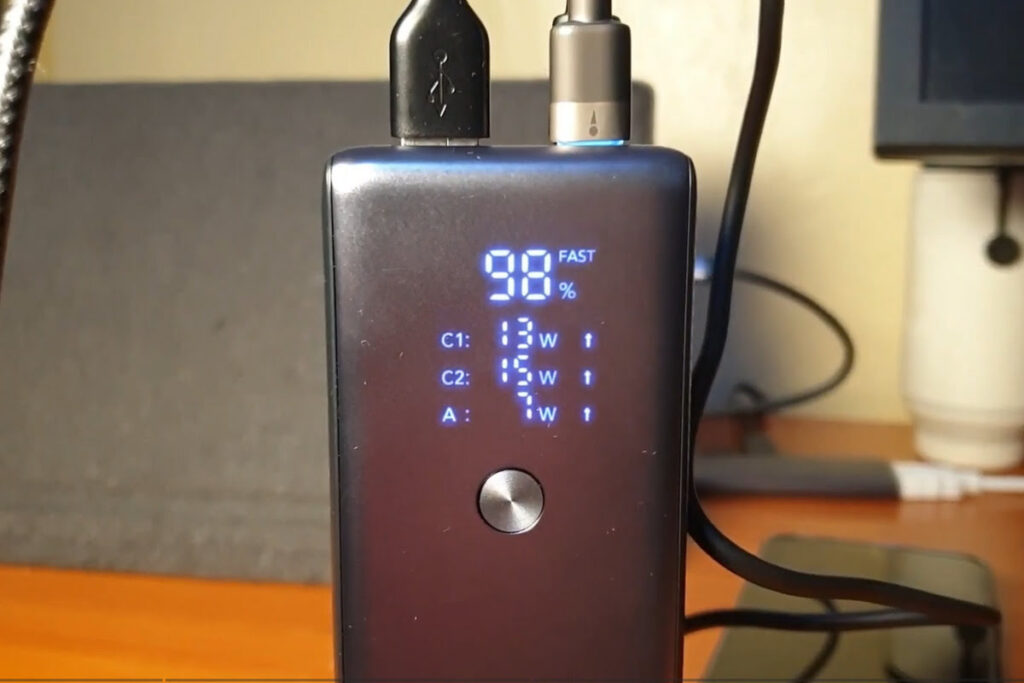
Here’s what I wish I’d understood earlier, before I understood how power banks actually work. Capacity tells you how long a power bank will last, but output power tells you how fast it’ll charge your devices. And honestly, speed matters way more than people think.
Output power is measured in watts or amps. Think of it like the difference between a trickle and a stream. A 5W output is slow — it’ll charge your phone, but you’ll be waiting a while. This is what you find on budget power banks, and it’s frustrating if you’re in a hurry.
The standard for most power banks is around 10W, which is fine for casual charging. But if you want actual fast charging, you’re looking at 18W or higher.
The thing is, your devices can handle even faster speeds now. Modern smartphones and tablets support rapid charging protocols, so a power bank with 30W, 45W, or even 65W output will make a noticeable difference when you’re trying to squeeze in a quick charge before you head out.
Personally, I rarely grab a power bank with less than 18W output anymore. It’s become a baseline expectation, not a nice-to-have feature.
Ports: one size definitely doesn’t fit all
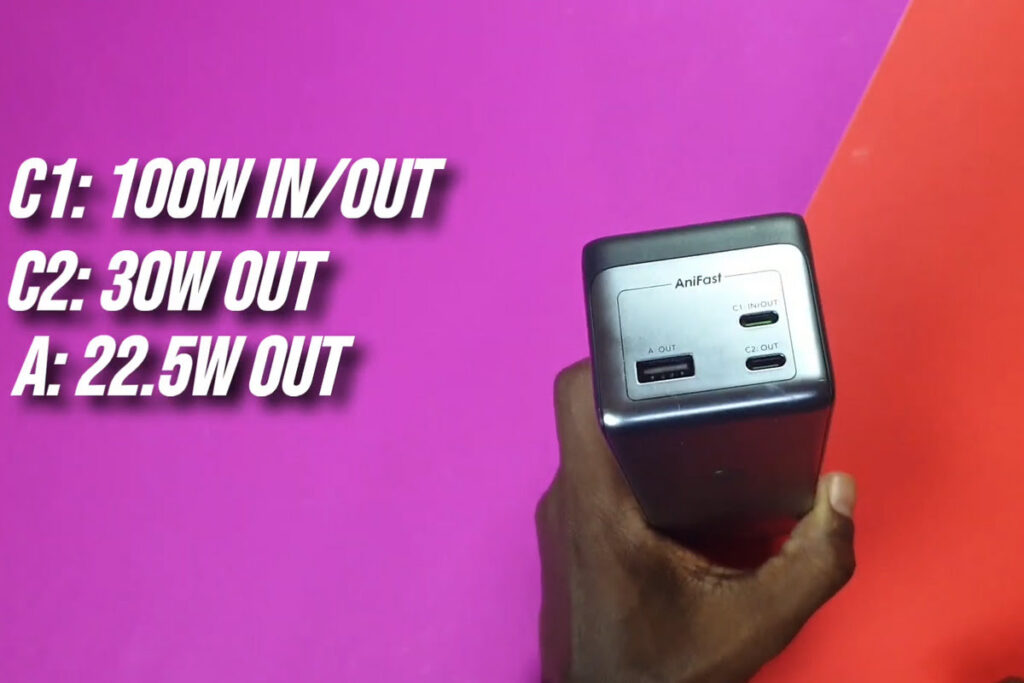
Ports are pretty straightforward. But what matters is versatility. You want a power bank that can charge different types of devices without forcing you to carry multiple cables. USB-A is still around and useful for older devices, but USB-C is rapidly becoming the standard. The best power banks offer both, or at least two USB-C ports, so you can charge multiple devices simultaneously.
If you’re someone with an iPhone and an Android phone, or a laptop and a phone, having multiple port options saves you the hassle of unplugging and replugging constantly.
Even better, there are powerbanks that come with retractable permanently attached cables. It could be just one USB-C cable or some powerbanks offer two or three options in one (USB-C, lightning, and micro-USB). I highly recommend the Oraimo Slice Link Pro if you’re on a budget, or the Anker Nano if you need more output and are willing to pay a little bit more.
Bigger capacity means more to carry
I need to be honest about something that manufacturers rarely highlight — anything above 20,000 mAh gets noticeably heavy. A 27,000 mAh power bank can feel like you’re carrying a small brick in your bag. For some travel scenarios, that’s fine. For everyday use or when you’re traveling light, it becomes annoying.
There’s a real trade-off between capacity and portability. The sweet spot is sticking with 10,000 to 20,000 mAh if you want something that doesn’t feel like dead weight but still gives you solid backup power. Save the massive units for trips where you know you’ll be charging multiple devices for extended periods.
How fast does the power bank recharge itself?
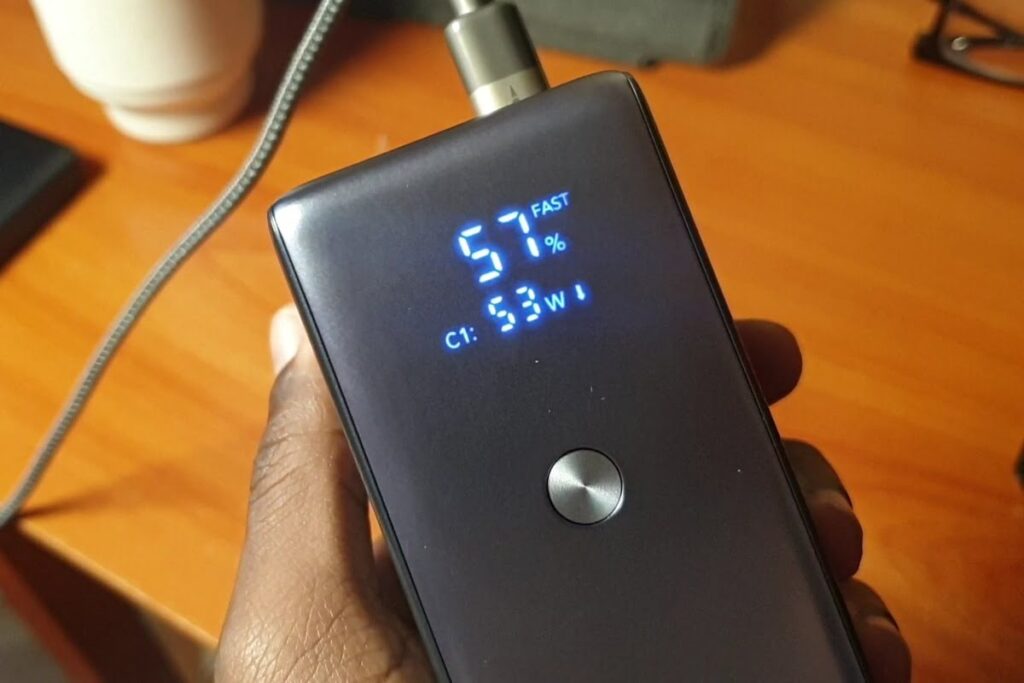
Here’s something people overlook constantly: how quickly can you actually refill your power bank? This matters because there’s no point having a 20,000 mAh bank if it takes you 15 hours to charge it back up.
This is measured by the input power, separate from output. An 18W input is considered slow for modern standards. The standard is around 45W, which means your power bank will be ready to go in a reasonable timeframe. And if you can find one with 65W or higher input? That’s premium territory. Your power bank recharges lightning-fast. I’ve tested units that go from empty to full in under three hours, which is genuinely convenient.
The advanced features: worth it or just expensive fluff?
Now we’re getting into the features that manufacturers use to justify premium pricing. Some of these are actually useful. Others are just marketing noise.
Pass-through charging is legitimately handy. It means you can charge your phone while simultaneously recharging the power bank itself. No more waiting for one to finish before starting the other. If you’re someone who’s always on the move, this is a quality-of-life upgrade.
Power Delivery for laptops is game-changing if you work on the go. Look for at least 45W USB-C Power Delivery — that’s enough for most ultrabooks and newer MacBooks. I’ve used a power bank to charge my laptop during travel, and it’s genuinely saved me when I couldn’t find an outlet.
Display indicators showing your remaining battery percentage are nice but increasingly standard. You shouldn’t have to pay extra for knowing how much power you’ve got left.
Wireless charging? Skip it. I tested it extensively, and it’s significantly less efficient, generates more heat, and drains the power bank faster than wired charging. But if you insist on a decent wireless charging power bank, give the Oraimo Magpower a shot.
The brands and products I actually trust and recommend
After testing dozens of power banks, I’ve narrowed down my recommendations to the two brands that consistently deliver real value without the gimmicks.
1. Oraimo
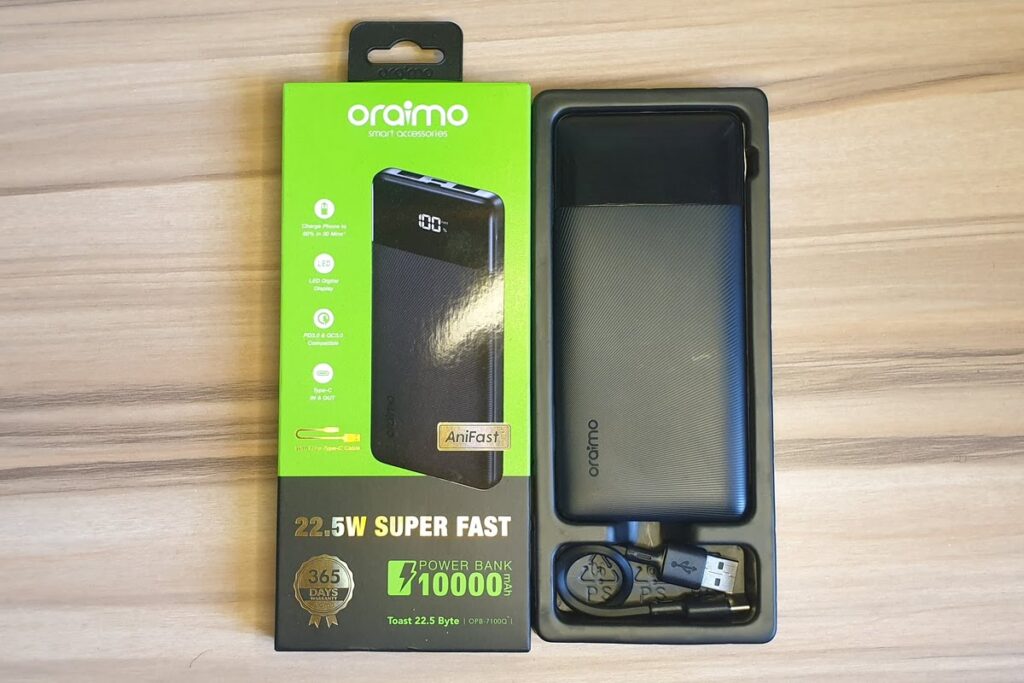
Oraimo has genuinely impressed me. I don’t say this lightly — I’m affiliated with them, but I’ve tested their products extensively, and they punch above their price point. Their designs are thoughtful, the charging speeds are competitive, and they understand what users actually need.
The Oraimo PowerJet 130 is my go-to for serious portable power. At 27,000 mAh with 65W output, I actually use it to charge my laptop when I’m traveling or working remotely. I reviewed it thoroughly on the blog, and it’s become my everyday carry for longer trips. The 100W output means it can genuinely handle laptop charging, not just phones — which is rare at this price point.
The Oraimo Toast 22.5 is what I grab when I want pocket-sized backup power. It’s compact, genuinely smaller than my phone, and packs 10,000 mAh of reliable capacity. Don’t let the small size fool you; it handles charging two devices simultaneously and does it without feeling underpowered.
If you’re buying from Oraimo, use the discount code ABUGA at checkout for 5% off your order. It’s a small savings, but it adds up.
2. Anker
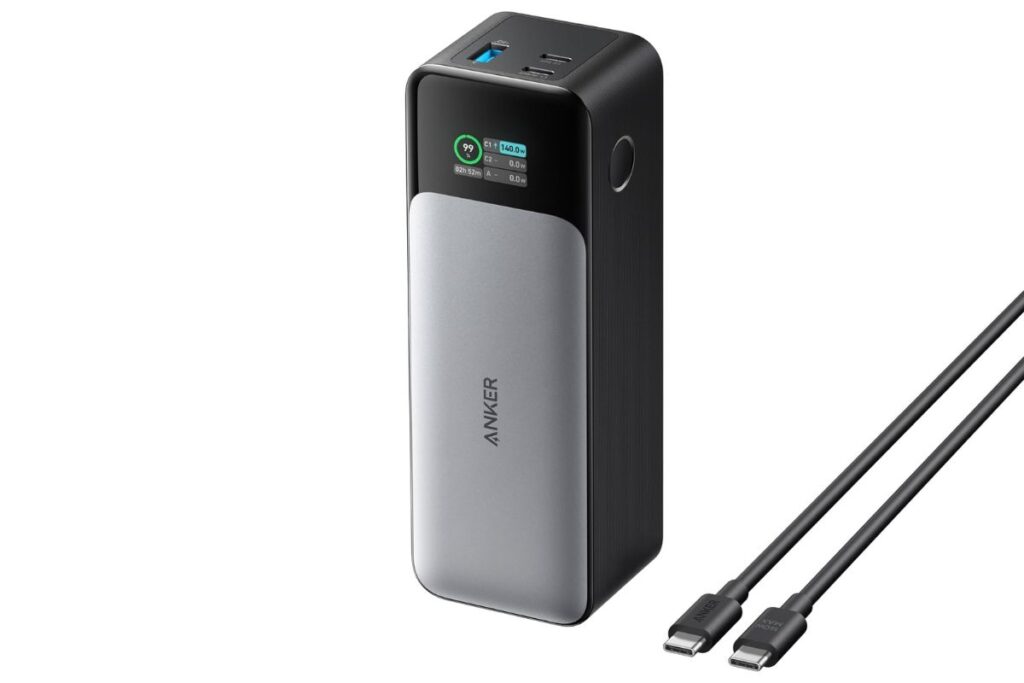
Anker remains the other brand I consistently recommend. They’ve built a reputation for balanced design and reliability, and their newer models are genuinely impressive.
For the laptop-charging category, the Anker 737 is their answer to serious power needs. At 24,000 mAh with 65W output, it’s incredibly close in performance to the PowerJet 130. I’ve tested it alongside the Oraimo, and both deliver reliable laptop charging.
For everyday carry, the Anker PowerCore 10K matches the Toast’s compact philosophy perfectly. At 10,000 mAh in an incredibly slim form factor, it’s one of the lightest options in its capacity class. The built-in fast-charging technology means it won’t waste your time, even though it’s small.
The 10,000 mAh capacity gives you roughly one full phone charge, making it ideal for a quick emergency top-up or a day trip. Like the Toast, it’s pocket-friendly and doesn’t feel like you’re carrying anything.
Choose the right power bank
Stop obsessing over specs you don’t understand. Focus on capacity that matches your actual use case, prioritize charging speed (18W minimum), and pick a brand with proven reliability. Everything else should be a bonus. Your power bank should be a tool that works for you, not something that complicates your life. With the information I’ve shared here, you now have everything you need to make a genuinely informed decision.
