


Apple’s new MacBook Neo is the first Mac in years that genuinely aims at the Chromebook and cheap Windows crowd, with a $599 starting price and specs that still feel like a real Mac rather than a watered‑down compromise. It now sits below the MacBook Air as Apple’s new entry‑level laptop, and on paper, it looks like exactly the kind of machine I get asked about constantly: “What’s the cheapest Mac I can buy without hating my life?”
Apple finally built a budget Mac that matters
The MacBook Neo keeps a full aluminum chassis, weighs just 2.7 pounds, and comes in four playful colours — blush, indigo, citrus, and silver instead of the usual boring grey slab. You’re looking at a 13‑inch Liquid Retina display with a 2408 x 1506 resolution, 500 nits of brightness, and support for 1 billion colours, which is brighter and sharper than most laptops at this price point.
Inside, Apple is using the A18 Pro chip which is the same architecture that powered the iPhone 16 Pro with a 6‑core CPU, 5‑core GPU, and 16‑core Neural Engine, all in a completely fanless design.
Apple claims up to 50% faster everyday performance than the bestselling Intel Core Ultra 5 Windows laptop, up to 2x faster photo editing, and up to 3x faster on‑device AI workloads, while still promising up to 16 hours of battery life on a single charge. That’s the kind of efficiency‑over‑brute‑force story I’ve been banging on about for a while, including in my breakdown of why spec sheet wars (like crazy RAM numbers) are often pure marketing.
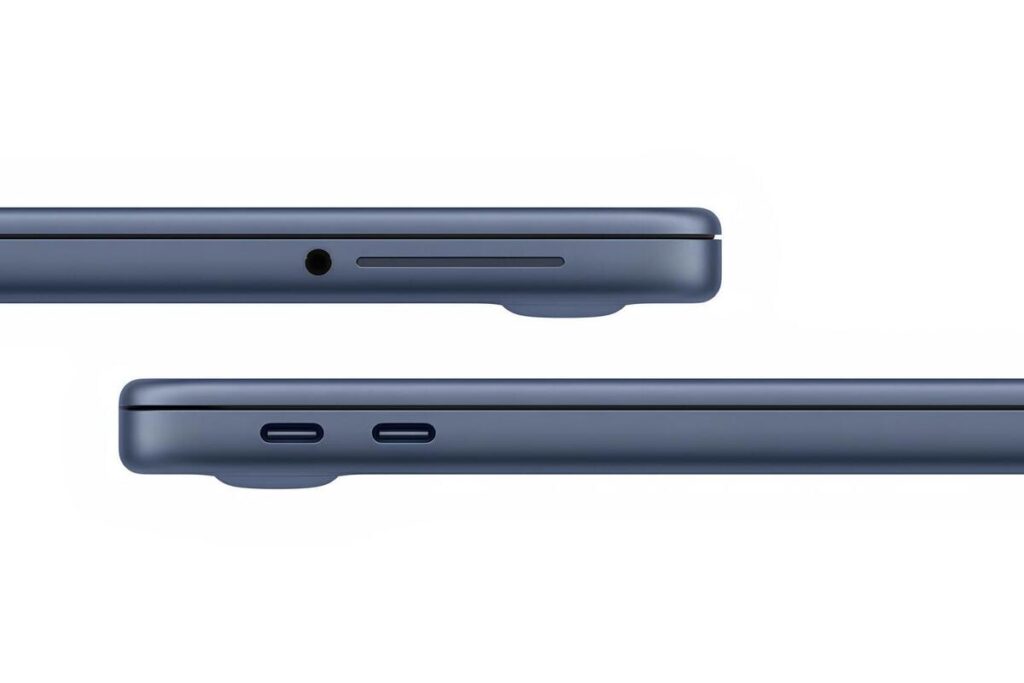
You still get 8GB of unified memory in both configurations, with either 256GB or 512GB of SSD storage. There’s a 1080p FaceTime HD camera, dual mics with directional beamforming, and dual side‑firing speakers that support Spatial Audio and Dolby Atmos; a layout shift from the usual hinge speakers meant to throw sound directly at you. Port selection is basic but honest: two USB‑C ports (one USB 3 for up to 10Gb/s and external 4K/60Hz displays, one slower USB 2), plus a 3.5mm headphone jack, Wi‑Fi 6E, and Bluetooth 6.
How much it costs, and who it’s for
Here’s the catch: the $599 base model gives you 8GB RAM, 256GB storage, and no Touch ID — just a regular power button on the Magic Keyboard. If you want fingerprint login and 512GB of storage, you’re looking at $699, and Apple doesn’t offer any other CPU/RAM upgrades on this line. For students and teachers, there’s aggressive education pricing: $499 for the base Neo and $599 for the Touch ID/512GB version, which is wild for an aluminum Mac running full macOS.
Who this laptop actually makes sense for

Apple is very clearly aiming this at students, first‑time Mac buyers, and anyone who mostly lives in the browser, Office/Google Docs, messaging apps, and light creative tools. If your day is email, Zoom, Notion, iMessage/WhatsApp, a bit of Canva, and the occasional photo tweak, the A18 Pro plus 8GB unified memory should be plenty, especially with Apple Intelligence and other on‑device AI features baked into macOS Tahoe.
If you’re planning serious 4K video editing, Xcode builds, or heavy 3D work, this might not be your machine — you’re still in MacBook Air/Pro territory. But I have a feeling that the A18 Pro may be able to do very light 4K editing.
How to get your Macbook Neo now
Pre‑orders for MacBook Neo are currently live on Apple’s online store in 30 countries and regions, with deliveries and in‑store availability set for March 11 2026. From my perspective, this is the first time I can point people asking for a cheap Mac to an actual current‑generation Apple laptop instead of saying, “Either stretch for a MacBook Air or just get a decent Windows machine.”
The big questions now are thermals, real‑world performance, and whether that no‑Touch‑ID base model feels like too much of a compromise. Let’s wait for real-world reviews or if I am lucky enough to be able to afford one anytime soon.
