

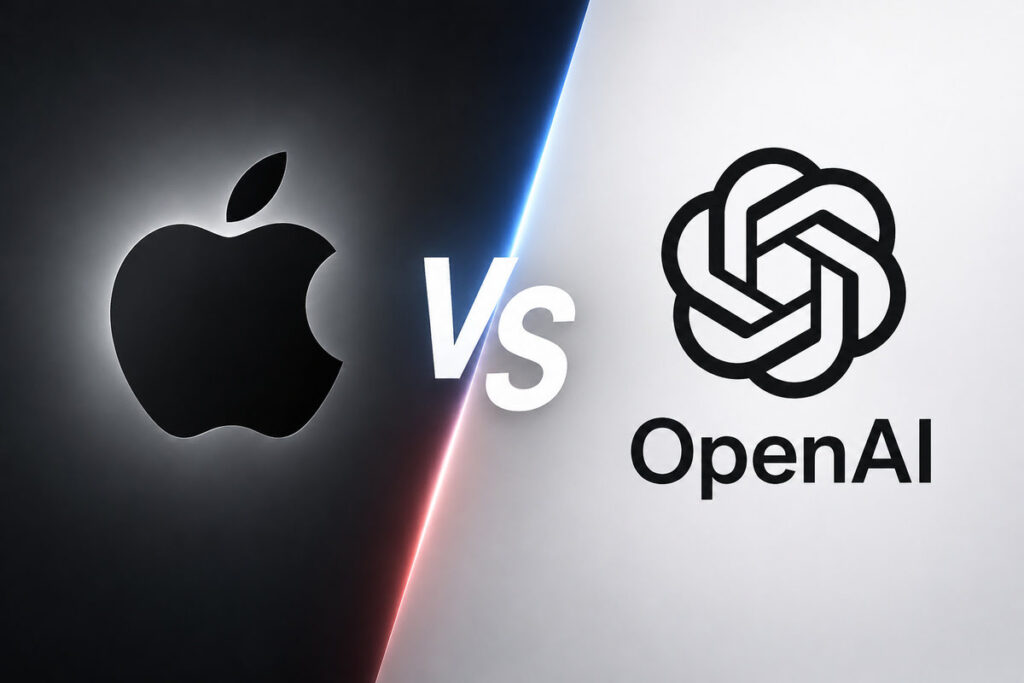
Apple has taken OpenAI to court, accusing the company of building its next hardware push on Apple’s confidential information. This is less about a single employee and more about a messy breakup between two companies that were already drifting from partners to rivals.
What Apple claims
Apple says it flagged the issue in a February letter and got no response. The company also says more than 400 former Apple employees now work at OpenAI, which it presents as part of a wider poaching pattern. Apple is seeking damages and a court order to stop OpenAI from using any of its trade secrets.
The lawsuit names OpenAI hardware chief Tang Tan, former Apple engineer Chang Liu, and io Products. Apple says Tan, who spent 24 years at Apple before joining OpenAI, was involved in interviews where candidates were allegedly asked to bring real hardware parts and discuss Apple products.
The sharpest allegation
The most striking claim is aimed at Chang Liu. Apple says he kept access to internal files after joining OpenAI by exploiting a bug, then downloaded confidential hardware material while already at the new company. Fortune reports that Liu even texted a former Apple colleague that it was “so funny” he could still reach the network storage.
Apple also says the hiring process itself was part of the problem, with some candidates allegedly told to bring Apple components into interviews for “show and tell” sessions. That is the sort of detail that makes this lawsuit feel bigger than a standard trade secrets fight.
OpenAI pushes back
OpenAI says it has “no interest in other companies’ trade secrets” and says it remains focused on building technology that helps people everywhere. That’s the company’s public line for now, but the legal pressure is already building.
The timing matters because OpenAI’s Jony Ive-linked device project is still expected in 2027. If Apple’s claims hold up in court, this could slow OpenAI’s hardware ambitions and give Apple more time to get ready for a new kind of competitor.
Why this matters
For me, the bigger story is that this turns an already uneasy relationship into a formal fight. Apple is not just accusing OpenAI of hiring talent; it is saying the company built part of its hardware future using Apple’s private playbook.
That raises the stakes on both sides. OpenAI gets dragged into a courtroom while trying to build a new device business, and Apple gets a chance to make the case that its old talent now crossed a line.